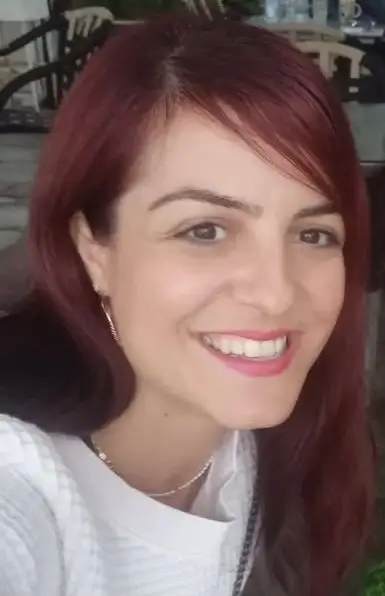


For over 10 years I have been involved in research with different roles, within different contexts and participating in various teams. Since I was wandering as a student in streets of the city in order to escape(?) from thoughts that troubled me at that time, unconsciously the Linguistic Landscape (LL) was a resource for learning and a bridge for my connection with the here-and-now condition. Gradually, LL observation and photo-documentation became more conscious and systematic in my everyday practices, so that it has become nowadays an important tool for discovering the city and its dynamics, a tool for reflection, for political dialogue, for research and teaching, in order to raise awareness on issues of sociolinguistic injustice and visibility in the public sphere.
After the recent and very intense pandemic experience, when mobility was confined and our relationship with public/private physical/social space and the right to the city were questioned on multiple levels, the linguistic landscape apart from an object of sociolinguistic study, also became an aspect of my self-definition, my research identity. I started considering myself a researcher-on-the-move (against an enforced spatial and symbolic “immobility”), a wandering-researcher, or else a “flâneuse-researcher” (Kitsiou, 2022, 55).
When we started to move freely in the city again, recognizing new concerns and emerging sociopolitical needs, I decided to invite my students in this linguistic-landscape-study “world”. Transforming, thus, the pandemic experience into hybrid socio-spatial practices and expanding our sociolinguistic repertoires, now, after sharing one year of Volos linguistic landscape research and co-reflection together with my beloved “flâneuses-co-researchers” we have created the “linguistic landscape diaries”, in order to entice/invite/attract others to engage in this conscious and reflexive wandering of the sociolinguistic space, of the linguistic landscape as a resource for learning, opting for experimentation, interdisciplinary trajectories, and the need to make our voices be heard. Our overall aim and vision are active interventions through participation in public discourse and space towards a more inclusive process of languaging and place-making.
Kitsiou, Roula (2022). Puzzle(s)/(d) in a hybrid superdiverse sociolinguistic space: Researcher’s immersion in the everyday life of a hosting centre for unaccompanied minors. In Victoria Mabel (Ed.), Methodological Issues and Challenges in Researching Transculturally (pp. 39-59). Cambridge Scholars Publishing.